News
-
Special Webinar | Holocaust Studies in Translation: Book Launch for Maria Ferenc’s “Everyone Asks What Will Happen to Us” 19 October 2026, 6:00 PM CET
The next EHRI webinar, part of the special series Holocaust Studies in Translation and organised together with the US Holocaust Memorial Museum, celebrates the launch of the English edition of Maria Ferenc’s book tracing how inhabitants of the Warsaw Ghetto wrestled with news and rumors about the Holocaust.
Learn More -
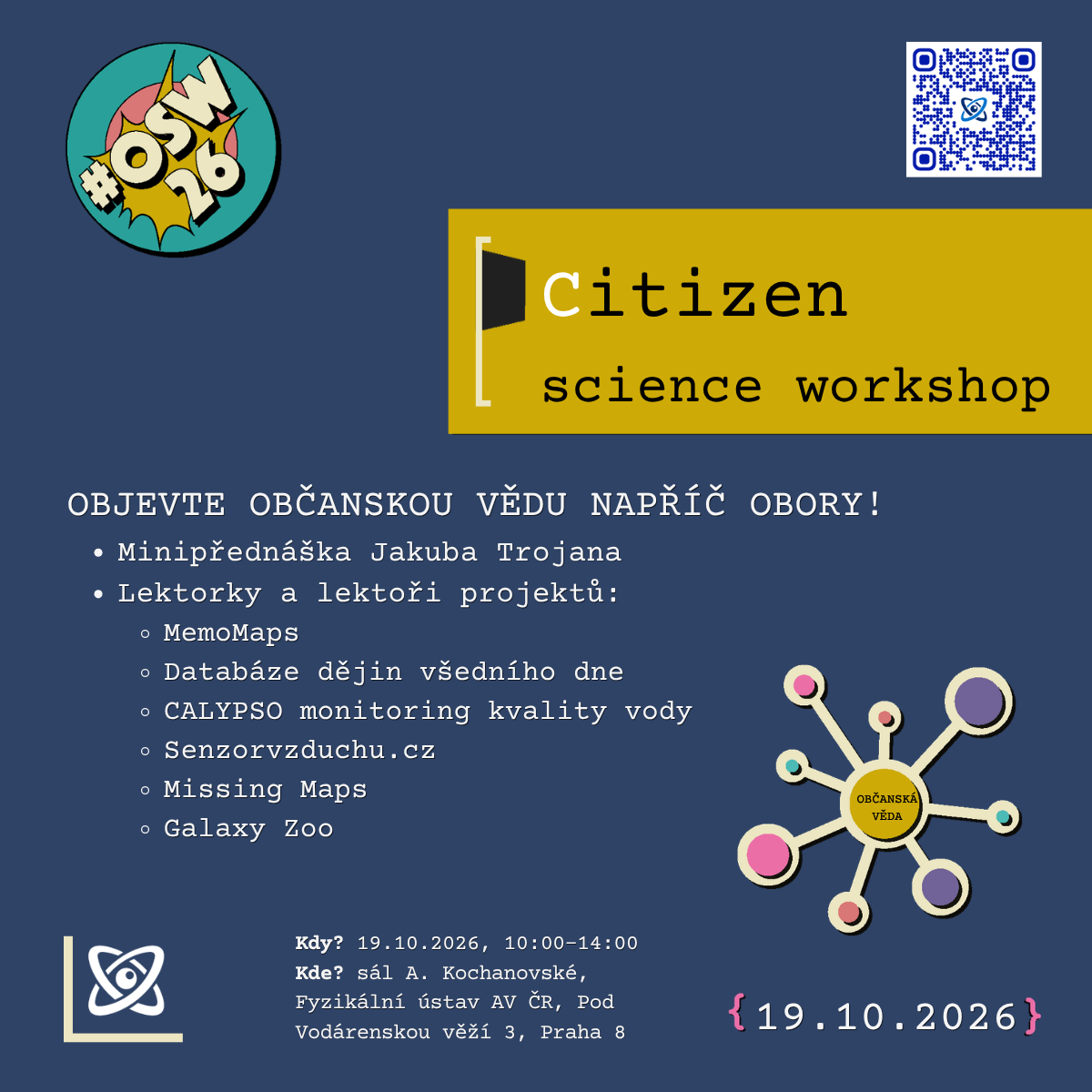
Workshop | Science is for Everyone: Citizen Science Workshop 19 October 2026, 10:00–14:00
The Institute of Physics of the Czech Academy of Sciences is hosting an interactive workshop as part of Open Science Week, exploring opportunities to engage the public in research across the natural sciences and humanities. The programme includes a mini-lecture by Jakub Trojan and presentations of citizen science projects, including MemoMaps. The event takes place in the A. Kochanovská Hall (FZU CAS, Pod Vodárenskou věží 3, Prague 8). For details, see the event poster and the FZU website.
Learn More -
EHRI Document Blog | "Martyrs, Mothers, Heroines?" (Self-)Representations of Female Concentration Camp Survivors in France, 1945 1 October 2026
A new post on the EHRI Document Blog by Hannah Sprute examines the visual (self-)representation of female political concentration camp survivors in France in the immediate aftermath of liberation, exploring how former prisoners used photography to negotiate their identities.
Learn More -
Lecture | Vlasta Kordová: The Fight against the ‘Objective Enemies’ of the Third Reich. The Transformation of the Police into a Central Instrument of the Totalitarian State and Genocide 26 October 2026
EHRI-CZ, in collaboration with the Jewish Museum in Prague, invites you to a lecture by Vlasta Kordová from the series Trends in Contemporary Holocaust Research, examining the transformation of Nazi law and police practice into an instrument for the pre-emptive suppression of the ‘objective enemies’ of the Third Reich.
Learn More -
Lecture | Magdalena Sedlická and Aneta Plzáková: Holocaust in Space and Data – MemoMap and the EHRI-CZ Portal 21 October 2026
The Kurt and Ursula Schubert Center for Jewish Studies at Palacký University Olomouc invites you to a lecture by Magdalena Sedlická and Aneta Plzáková on the EHRI infrastructure, the MemoMap application, and the emerging EHRI-CZ Portal.
Learn More -
EHRI Document Blog | Victims of Brain Research during National Socialism 31 August 2026
New article written by Aisling Shalvey explores how the Victims of Brain Research during National Socialism project uses survivor testimony and archival research to document Nazi medical experiments, restore victims’ identities, and expose the system that enabled their abuse.
Learn More -
A New Season of the EHRI Podcast | For the Living and the Dead: Traces of the Holocaust 5 August 2026
The fourth season of the EHRI Podcast series For the Living and the Dead. Traces of the Holocaust features seven new episodes around the theme Roma and the Holocaust. New podcast host Lovro Kralj – EHRI Research and Content Officer – interviews seven experts who share their insights while narrating the story of a person or object that really took their breath away.
Learn More -
DARIAH-CH Online Training Series 2026–2027 September 2026 – May 2027
DARIAH-CH is offering a free online training series covering various aspects of the Digital Humanities, including FAIR data, online editions, Wikidata and AI. The course aims at beginners and those who would like to improve their digital literacy.
Learn More -
Call for Papers | Actors, Witnesses, or Objects? Children in Postwar Central and Eastern Europe, 1945–1989 Deadline for abstract submissions: 18 September 2026
The European Network for Remembrance and Solidarity (ENRS) and the Federal Institute for Culture and History of the Germans in Eastern Europe (BKGE) are organizing a conference focusing on children’s postwar experiences marked by political division, forced emigration, ideological conflicts, and the rise of communist regimes.
Learn More -
Call for Applications | Mapping Jewish Communities: Spaces of History and Memory Application deadline: 25 August 2026
The Philip Friedman Centre for Jewish Studies at the University of Łódź has issued a call for applications for the interdisciplinary workshop “Mapping Jewish Communities: Spaces of History and Memory,” focusing on cities of important Jewish presence as multilayered spaces of history, memory, and contemporary heritage. The workshop will take place 23–25 September 2026 in Łódź, Poland.
Learn More -
Document Blog EHRI | Secret notes from Austrian resistance members in Gestapo captivity 30 July 2026
A new post on the EHRI Document Blog by Barnabas Balint examines clandestine notes (Kassiber) written by Elfriede Hartmann, a member of the Austrian anti-Nazi resistance, while imprisoned by the Gestapo.
Learn More -
Call for Applications: EHRI-ERIC Transnational Workshop | Documentation as Resistance Deadline for applications: 24 August 2026
A call for applications has been published for a two-day EHRI-ERIC transnational seminar entitled “Documentation as Resistance: Methodologies for Reconstructing Early Postwar Transnational Jewish Knowledge Networks”, which will take place in London on 1–2 December 2026.
Learn More -
EHRI webinar and podcast series | Persecution of the Roma 5 August 2026
To coincide with the Roma Holocaust Memorial Day on 2 August, EHRI organises a special webinar focused on the history of the persecution of Roma during the Second World War on Wednesday August 5, 2pm CET.
Learn More -
Call for Applications: EHRI-ERIC Transnational Seminar | Holocaust Memoirs Deadline for applications: 16 August 2026
The call for applications for the EHRI-ERIC Transnational Seminar “Holocaust Memoirs – Who Will Write Their History?”, which will take place on 30 November – 4 December 2026 at the Terezin Memorial, has just been published.
Learn More -
Document Blog EHRI: The Extermination of Jews in the Kalinindorf Jewish National Raion 29 June 2026
Based on newly discovered archival documents, this study reconstructs the course of the autumn 1941 massacres in the Kalinindorf Jewish National District, provides precise casualty figures, and sheds light on the role of local collaborators. The article is available in the English version as well as in the Russian original.
Learn More -
EHRI-CZ Fellow Emily Roche: Building Survival: Experiences of Architect Prisoners at Auschwitz The second fellow to complete a fellowship at the Jewish Museum in Prague this June is Dr. Emily Julia Roche. Her research focuses on the topic Building Survival: Experiences of Architect Prisoners at Auschwitz.
Learn More -
Lecture Laura Hobson Faure | Who Will Rescue Us? 24 June 2026, 5pm
Join us for a lecture by historian Laura Hobson Faure on the fates of Jewish children in France and the United States during the Holocaust and its aftermath.
Learn More -
MÚA at the Science Fair 2026 June 4–6, 2026
Explore the history of the Holocaust through urban space at the Science Fair 2026. The Masaryk Institute and Archives of the CAS will feature MemoMap applications and other educational activities for children and adults.
Learn More -
EHRI webinar: EHRI-CZ Portal: Integrating Holocaust-Related Data Across Institutions 17 June 2026, 3 PM
In the upcoming online EHRI webinar, Aneta Plzáková and Maria Dermentzi will present the current state of development of the EHRI-CZ Portal. The Portal connects Holocaust-related data from various institutions and addresses challenges such as multilingualism and metadata standards.
Learn More -
C4DHI Anniversary Workshop 1-2 June 2026
We would like to invite you to a two-day workshop celebrating the third anniversary of the Centre for Digital Humanities Integration (C4DHI). The event will take place at the Jinonice Campus.
Learn More -
Lecture by Jan Láníček | Holocaust Survivors and Postwar Retribution 1 June 2026, 6 PM
We would like to invite you to a lecture by Jan Láníček. It is a part of the series Trends in Contemporary Holocaust Research, organized by EHRI-CZ in collaboration with the Jewish Museum in Prague.
Learn More -
The EHRI Czech National Node Welcomes Its First 2026 EHRI-ERIC Conny Kristel Fellow Leonie Rogg will begin her research stay on Monday, 27 May, at the Archives of the Jewish Museum in Prague and will move to the Czech National Archives in June.
Learn More -
Conny Kristel Fellowship The second call for the Conny Kristel Fellowship (under EHRI-ERIC) is now open. The fellowship offers researchers access to 25 collection-holding institutions across Europe, Israel, and the U.S. Applications can be submitted until June 7 (midnight CET).
Learn More -
Opening of the Exhibition Lives Cut Short and Presentation of the Ruth Maier Foundation 7 May 2026, 10am, South Moravian Region, Office Foyer, Žerotínovo nám. 449/3, Brno
You are cordially invited to the opening of the exhibition “Lives Cut Short. Searching for Refuge during the Holocaust: The Story of Ruth Maier.” The opening will include a round table discussion titled “The Price of Safety: Searching for Refuge Then and Now,” as well as a presentation of the newly established Ruth Maier Foundation.
Learn More -
Guided Walk with MemoMap in Prague 7 19 May 2026, 4pm
Join us for a walk through Prague 7, during which we will introduce you to the MemoMap Prague application. The walk is free of charge, meeting point at Mama Shelter hotel.
Learn More -
EHRI-ERIC Strategy Days in Prague From March 23 to 25, 2026, the Masaryk Institute and Archives hosted the EHRI-ERIC Strategy Days. Discussions focused on the future of research, data sharing, and sustainability.
Learn More -
EHRI Document Blog | Norwegian Digital Prisoner Archive 1940-1945, Fanger.no: A Database on WWII Captivity A new post has been published on the EHRI Document Blog about Norwegian Digital Prisoner Archive 1940–1945, which contains data on almost 50,000 individuals.
Learn More -
Exhibition at Little Mehrin | Otte Wallish: From Znojmo to Tel Aviv 30 March 2026, 6pm
The Malý Mehrin Museum will host the opening of the exhibition Otte Wallish: From Znojmo to Tel Aviv prepared by Eva Janáčová. The exhibition will be on display until the end of August 2026.
Learn More -
CfP | Workshop of EHRI-CZ and EHRI-AT 18–19 May 2026
Rethinking Holocaust History through Geospatial Approaches.
Learn More -
Launch of the web applications MemoMap Pacov and MemoMap Říčany On the occasion of the International Holocaust Remembrance Day, the Czech node of the European Holocaust Research Infrastructure (EHRI-CZ), building on the MemoMap Prague project, presents two new interactive maps exploring the fates of the Jewish population during the period of the Protectorate of Bohemia and Moravia and beyond.
Learn More -
Lecture by Alexandra Szczepan | Intimate Cartographies: Maps as Holocaust Testimonies 15 January 2026, 6pm, Auditorium OVK – 3rd floor, Maiselova 15, Prague 1
Alexandra Szczepan will show how Holocaust witnesses created and used maps as a means to capture their war experiences and post-war memories.
Learn More -
EHRI-Document Blog | “Boyhood Drawings Made in Deportation” New EHRI Document Blog has been published. The post “Boyhood Drawings Made in Deportation”: A Discovery of Long-Lost Works Raises Questions About Identity and the Narration of the Self was written by Olga Stefan.
Learn More -
EHRI’s National Coordinators Gather at The Parkes Institute in Southampton In early November, EHRI’s national coordinators, associates and the Central Hub members assembled for a National Coordinators Committee meeting at The Parkes Institute at the University of Southampton in the UK.
Learn More -
EHRI-Document Blog | Europe in Persecution A new Special Thematic Series was published on the EHRI Document Blog: Data on Nazi Persecution. The first post Europe in Persecution written by Olaf Simons and Anne Purschwitz (University of Halle), introduces new digital maps that make the breadth of camps, ghettos, and other sites of persecution across Europe visible.
Learn More -
Renata Berkyová’s lecture | Transgenerational Trauma and Current Forms of Roma and Sinti Identities 11. 12. 2025, 6 pm
Invitation to the closing lecture this year from the lecture series of the Jewish Museum in Prague and EHRI-CZ “New Views and Sources on the History of the Holocaust”.
Learn More -
Conference “Blank Spaces of Jewish Moravia and Slovakia” March 29, 2026
The cultural-educational institute Small Mehrin in Brno invites to a historical conference dedicated to Moravian–Slovak interconnections within European Jewish history.
Learn More -
EHRI Webinar: Using AI to Facilitate the Publication of New EHRI Online Editions December 3, 2025, 3pm
Maria Dermentzi will present the EHRI Annotator, a new online tool designed to streamline the creation of digital editions by automatically identifying key entities in documents.
Learn More -
Christian Nationalism, Nation-Building, and the Making of the Holocaust in Slovakia | Lecture by Hana Kubátová November 24, 2025, 18:00, Maisel Synagogue, Prague
Historian Hana Kubátová will present her book, which explores how the formation of the Slovak national state during World War II was intertwined with collective betrayal and genocide.
Learn More -
Establishment of the EHRI-CZ Advisory Board 16 September 2025, Masaryk Institute and Archives of the CAS, Prague
The Advisory Board for the Czech node of EHRI has been newly established to provide feedback on the activities and services of EHRI-CZ and to strengthen the connection between the infrastructure and the academic environment.
Learn More -
International conference "Transformations of Shoah Trauma in Post-2000 Literatures" 5–6 November 2025, Palacký University, Olomouc
The conference will present the perspectives of researchers from around the world on how the narrative of the Shoah and its image in cultural memory have been transformed since the year 2000.
Learn More -
18th annual festival Days of Jewish Culture Olomouc 5–15 November 2025, Olomouc
The festival, titled “Never Again!?”, takes place from November 5–15, 2025. The opening ceremony will be on Thursday, November 6 at 5:00 PM in the Mozarteum.
Learn More -
Looking back at the workshop New Readings of Holocaust Testimony 20–21 October 2025, The Institute for Czech Literature, Prague
The event offered an inspiring space for exchanging experiences among experts from different disciplines and showcased new ways to connect historical research with technological innovation.
Learn More -
Voices – Letters from the Holocaust 29 October 2025
The webinar “Voices – Letters from the Holocaust” introduces an innovative audiovisual exhibition that gives life to personal stories of Moravian Holocaust victims through their surviving correspondence.
Learn More -
Jews from Denmark in Terezín 27 October 2025, 6:00 pm, Auditorium OVK, Maiselova 15, Prague 1, 3rd floor
Invitation to a lecture by Silvie Goldbaum Tarabini, who will look at Terezín through the eyes of the Danish prisoners.
Learn More -
EHRI has joined IHRA as a PIP EHRI-ERIC has officially joined the International Holocaust Remembrance Alliance (IHRA) as a Permanent International Partner.
Learn More -
Far from Prague. The Holocaust in Moravia ꟾ Lecture by Benjamin Frommer Invitation to a lecture by American historian Benjamin Frommer, who will explore the divergent paths of Moravia’s Jews and discuss possible causes for the differences compared to Bohemia and Prague.
Learn More -
New blogpost ꟾ Revealing Romanian Holocaust History In the latest EHRI Document Blog post, Hailey Dilman-Sharon and Greta Barak explain how connecting the microarchives of Matatias Carp and Wilhelm Filderman can help complete our understanding of the history of the Holocaust in Romania.
Learn More -
EHRI-ERIC Call for Applications ꟾ Conny Kristel Fellowship Programme 2025 Fellowships provide access to key Holocaust-related archives and collections, as well as expertise in archives and digital humanities.
Learn More -
New blogpost ꟾ Significance of Animal-inspired Toys and Jewelry during the Holocaust Animal-shaped toys and jewelery provided emotional support to their owners during the persecution, but they were also used in underground activities. Read more in Anna Batzeli’s post on the EHRI Document Blog.
Learn More -
Lecture of Dr. Janine P. Holc Invitation to a lecture by Dr. Janine P. Holc, Professor of Political Science: The Weavers of Trautenau, Jewish Female Forced Labor in the Holocaust from the series “New Views and Sources on the History of Holocaust”.
Learn More -
Conference ꟾ Transformations of Shoah Trauma in Post-2000 Literatures Invitation to the international academic conference “Transformations of Shoah Trauma in Post-2000 Literatures”, which will take place on 5 and 6 November 2025 at Palacký University in Olomouc.
Learn More -
Lost Prague. The Jewish Community Under Nazi Rule The presentation will take place on Saturday, June 7, from 1:45 PM as part of the Science Fair in Prague’s Letňany. We will present the MemoMap Prague web application in detail here.
Learn More -
Lecture of Dirk Rupnow Lecture of the German historian Dirk Rupnow: Post-Nazism – Postcolonialism – Post-Migration: The Current Debate on Holocaust Memory will take place as part of the lecture series organised by the Jewish Museum Prague and EHRI-CZ “New Views and Sources on the History of Holocaust “ on 29th May, at 7pm, at the Auditorium OVK, Maiselova 15, Praha 1, 3rd floor.
Learn More -
CfP ꟾ Workshop New Readings of Holocaust Testimony Workshop of EHRI-CZ, GWZO, and the Malach Center for Visual History will focus on how new (especially linguistic) technologies are transforming historical research.
Learn More -
My Moravian Family Heritage ꟾ Series of Public Discussions During the week of May 19-23, Mehrin is organizing a series of public discussions with Ann M. Altman Ph.D. entitled My Moravian Family Heritage.
Learn More -
The Desire to Live ꟾ The (Un)Ordinary Story of František Färber from Kroměříž The exhibition shows drawings inspired by the life of František Färber, a Holocaust survivor from Kroměříž.
Learn More -
Presentation of Book by Andrea Löw Presentation of book by Andrea Löw: „Always with one foot in the grave“ – Experiences of German Jews. The presentation is part of a series organized by the Jewish Museum in Prague and the Czech Node of the European Holocaust Research Institute (EHRI) called “New Views and Sources on the History of Holocaust”.
Learn More -
Conference ꟾ White Places of Jewish Moravia and Vienna The conference “White Places of Jewish Moravia and Vienna” will take place on Sunday, April 6, 2025, at MUNI, Komenský náměstí 2. (Sir Roger Scruton Hall).
Learn More -
Eva Janáčová's lecture ꟾ Spa Antisemitism Invitation to the second lecture of the lecture series organized by EHRI-CZ and the Jewish Museum Prague.
Learn More -
Lecture EHRI-CZ ꟾ Documentation Action in Prague (EHRI online edition) Invitation to the lecture New Views and Sources on History of Holocaust (part of the lecture series organized by EHRI-CZ and the Jewish Museum Prague).
Learn More -
Unlocking Holocaust Testimony ꟾ EHRI-CLARIN Datathon Workshop The Hands-on workshop will take place on 26-27 February 2025 at the Loránd Eötvös University in Budapest.
Learn More -
EHRI PRESS RELEASE | EHRI Becomes an ERIC to Secure the Future of Holocaust Research The European Holocaust Research Infrastructure (EHRI) was inaugurated as a permanent European Research Infrastructure Consortium (ERIC) during a ceremony at the Polin Museum in Warsaw.
Learn More -
EHRI-CZ Seminar | Databases of the Persecuted | New Perspectives on Holocaust Research, Education, and Commemoration The two-day EHRI-CZ seminar focused on assessing the current state of, and critically reflecting on, the documentation of the names and fates of people who were persecuted during the Holocaust in the Czech lands and Central and Eastern Europe.
Learn More -
Podcast Episode | Uncovering Hidden (Hi)stories The final episode of the third series of the EHRI podcast takes a step back to look at micro-archives in a more general sense. In keeping with our theme, however, we also focus on an object that teaches us more about the Holocaust.
Learn More -
Call for Papers | The Quantitative Turn in Holocaust Research Article proposals can be submitted to Eastern European Holocaust Studies in English or Ukrainian at eehs@degruyter.com to the editors.
Learn More -
Victim Databases | New perspectives on Holocaust research, education and remembrance Seminar of the Czech node of the European Holocaust Research Infrastructure (EHRI).
Learn More -
“I Loved Him as a Father” | The Silences of Hiding-Related Sexual Violence If This Is A Woman – EHRI Document Blog Series on Gender Studies and Holocaust History.
Learn More -
EHRI Webinar 25 Sep | Analyzing Early Holocaust Testimonies with Digital Tools The webinar “The Future of the Past: Analyzing Early Holocaust Testimonies with Digital Tools” will discuss the key aspects of the “Digital Lens” project, beginning with an overview of our research approach and highlighting the most significant findings.
Learn More -
Latest EHRI Blogpost | Uncovering Local Hungarian Jewish Histories The latest EHRI Document Blogpost, written by former EHRI fellow and Oxford Doctoral Candidate Barnabas Balint, identifies a specific genre of local history source – Hungarian Jewish community history books.
Learn More -
Call for Applications EHRI Workshop in Poland | Holocaust Places and Spaces as Data With the growing interest in Holocaust geographies, researchers, projects and/or educators increasingly work and struggle with data representing the places and spaces of Holocaust history.
Learn More -
Call for Applications | EHRI Seminar Holocaust and Exile November 4 - 7 2024 | German Exile Archive 1933-1945 | Frankfurt am Main, Germany | Deadline for submissions: 30 June 2024.
Learn More -
Next EHRI Webinar | June l Digitising Greek-Jewish Social Networks in Auschwitz-Birkenau Since the mid-1980s, the structure of all major audiovisual Holocaust archives has rested on the conceptual triangulation of ’testimony’, the ‘witness’, and ‘survival’. The audiovisual testimony becomes the organising unit of the digital Holocaust archive and thus determines its serial logic.
Learn More -
New Yiddish Documents in Early Holocaust Testimony Edition EHRI launches a new series of survivors’ testimonies recorded before 1960. The second EHRI Online Edition, the Early Holocaust Testimony, has been expanded by the unique documents written in the Yiddish language.
Learn More -
Next EHRI Webinar 20 March | Societies under German Occupation EHRI Webinar | 20 March 2024 | 3 PM CET | On Zoom During the Second World War, approximately 230 million people in 27 countries lived under German occupation.
Learn More -
Holocaust Testimonies as Language Resources Paper submission deadline 28 February 2024. Testimonies stand as the primary source of information that describe the Holocaust, offering first-hand accounts and personal narratives of those who experienced it.
Learn More -
Children of Antonín Kalina | Exhibition The exhibition will take place from February 8, 2024 to June 30, 2024 in the synagogue in Třebíč.
Learn More -
New Date EHRI Webinar, 7 February | The Digital Remembrance Landscape of Austria The Digital Memory Landscape Austria (DERLA) is a documentation and education project. It documents the places and signs of remembrance of the victims and places of terror of National Socialism in Austria and aims at a critical examination of National Socialism and fascism and the remembrance of them.
Learn More -
Call for Applications EHRI Partner US Holocaust Memorial Museum | 2024 Annual Seminar on Ethics, Religion, and the Holocaust The 2024 Annual Faculty Seminar on Ethics, Religion, and the Holocaust will examine the profound and painful questions the Holocaust and its aftermath raise for Jews and Christians in regard to their texts and traditions.
Learn More -
Call for Applications | Alfred Landecker Lecturer Program 2024 The Alfred Landecker Foundation is pleased to invite applications from highly qualified postdocs in the humanities and social sciences, for a full-time lecturer program set to begin on October 1, 2024.
Learn More -
Call for Participants | Mapping the Holocaust, UK Universities Workshop In examining the routes taken by people, objects, and ideas during and after the Holocaust, this workshop highlights the connections and diversions (geographically, temporally, topically, etc.) when attempting to ‘map the Holocaust’.
Learn More -
Preserving Memory. Holocaust Monuments and Memorials in Central Europe. This international conference will focus on the expert evaluation of the topic of Holocaust monuments and memorials in Central Europe.
Learn More -
Interdisciplinary perspectives and personal micro-stories enrich Holocaust research Tragic events framed the four-day international conference on Holocaust research took place in November 2023 in Prague. Due to the war, researchers from Israel could not participate in the long-planned Lessons and Legacies event.
Learn More -
Call for Applications CLARIN-EHRI Workshop | "Natural Language Processing Meets Holocaust Archives" This interactive, hands-on workshop is a cooperation between two transnational European research infrastructures, bringing language technology together with Holocaust archives and data
Learn More -
Deadline for applications for Conny Kristel Fellowships 2023 Fellowships provide access to key Holocaust-related archives and collections, as well as expertise in archives and digital humanities.
Learn More -
Wartime Paperwork: How Citizens Navigated Soviet Bureaucracy During and After World War II Tobias Walsh’s article in a series on the Holocaust in Ukraine outlines how Soviet Jewish citizens exploited loopholes in the Soviet bureaucracy to negotiate their position in society.
Learn More -
EHRI launches Geospatial Repository By providing access to data on Holocaust-related places and spaces, the EHRI Geospatial Repository facilitates research focused on spatial and geographical approaches.
Learn More