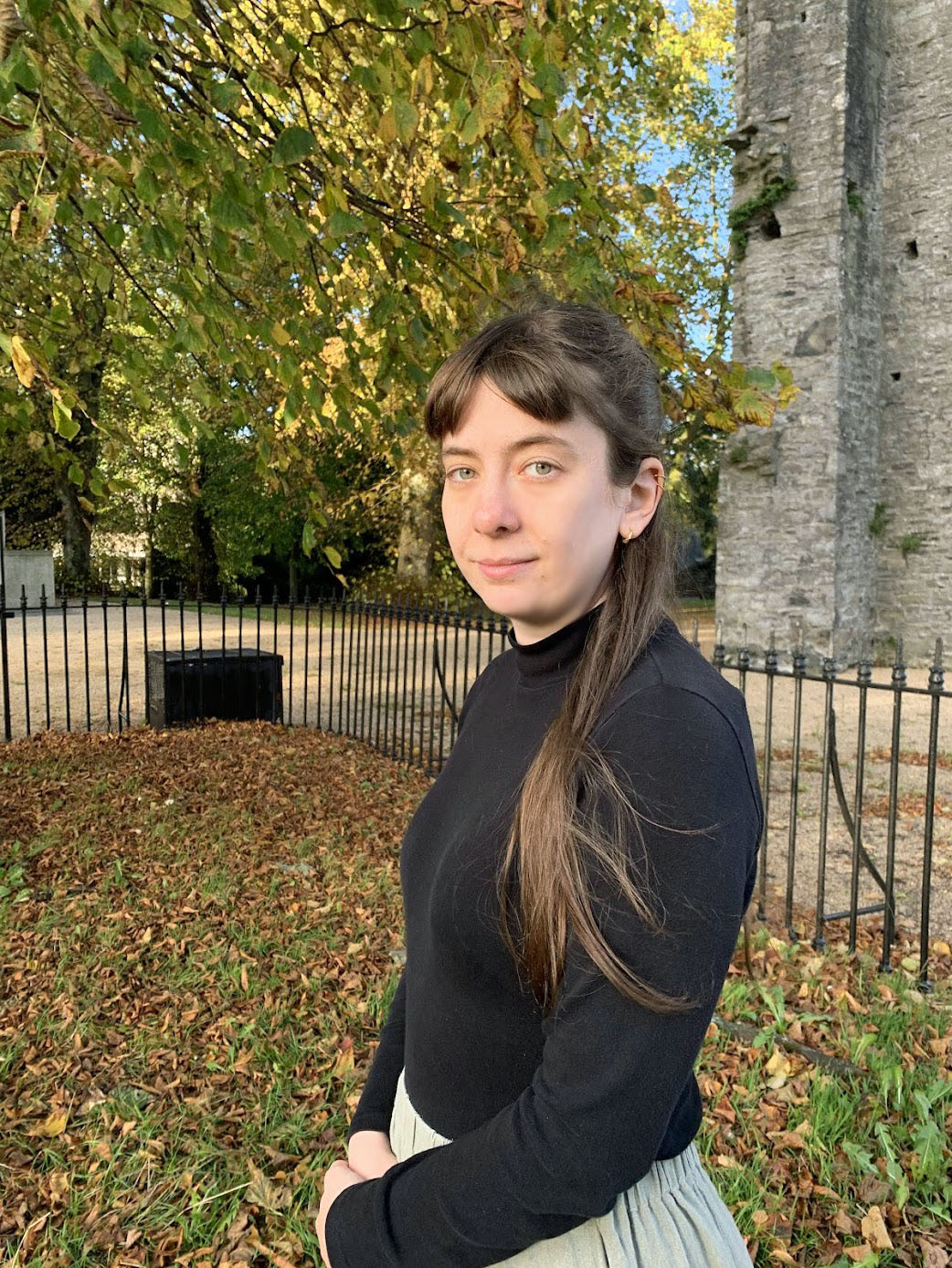
EHRI-CZ Fellow Emily Roche: Building Survival: Experiences of Architect Prisoners at Auschwitz
She is interested in the experiences of architects imprisoned at Auschwitz and whether strategies for shaping space may have contributed to their survival.
The genocidal intent of the Nazi regime is evident in its architecture, such as the barracks, roads, watchtowers, gas chambers, and crematoria at Auschwitz—designed by Nazi architects and built by forced labour. Among these structures, prisoners fought for survival, developing clandestine networks and strategies of defiance in the space of their imprisonment. Some of these prisoners were architects who received forced labour assignments in the camp’s construction offices, where they worked on plans for the expansion of the notorious camp while also using their expertise to resist Nazi control. This project is a study of how architects experienced and survived incarceration in Auschwitz.
The survival of architects within the Auschwitz camp was based not only on chance, but also on the support of networks that managed to function in the hellish conditions of the camp. Adopting a biographical perspective on architect prisoners. In the research project the Fellow is researching the architectural history of Auschwitz from the perspective of its prisoners, focusing on architects to emphasize how spatial strategies could shape survival.
Dr. Emily Julia Roche is a Government of Ireland Postdoctoral Fellow at Maynooth University. She received a PhD in History from Brown University in 2024 and her work has been supported by the Polish Studies Association, the Association of Slavic, Eastern European and Eurasian Studies, the United States Holocaust Memorial Museum, EHRI, and the USC Shoah Foundation. She has published on topics such as suicide in the Warsaw Ghetto and architectural networks in occupied Warsaw. Her first book, which explores architectural nation-building in Poland through the biographies of Helena and Szymon Syrkus, is under contract with the University of Toronto Press.